
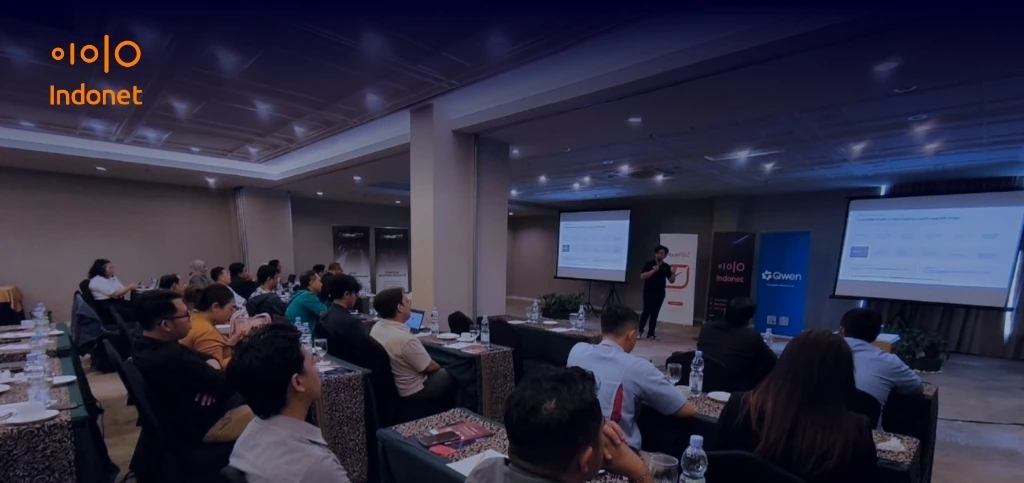
Jakarta, September 23, 2026 — Indonet, together with Alibaba Cloud and supported by Penta Group and Kawasan Industri Jababeka, hosted Industry Next: Connected, Integrated & Intelligent. The forum explored how connectivity, ERP, cloud, and AI are shaping digital transformation in the manufacturing industry.
Today, manufacturers face increasingly complex operations and growing volumes of data. At the same time, they need to improve efficiency and remain agile. As a result, technology integration has become increasingly important for modern manufacturing businesses.
The forum brought together industry practitioners to discuss practical insights and use cases. Through these discussions, participants explored how technology can improve operational efficiency, streamline business processes, and support evolving industry needs.
Connecting Technology to Real Manufacturing Needs
Digital transformation in manufacturing is no longer about adopting individual technologies. Instead, businesses need to consider how different technologies can work together.
Connectivity, enterprise resource planning (ERP), cloud infrastructure, and artificial intelligence (AI) can create greater value when they are part of an integrated digital ecosystem.
At Industry Next, speakers and industry practitioners shared perspectives on how these technologies can support manufacturing operations. The discussions covered everything from connecting systems and data to improving visibility across business processes.
First, reliable connectivity provides the foundation for connected operations. It helps businesses keep systems, facilities, and teams connected.
Meanwhile, ERP brings core business processes and data together. Cloud technology, in turn, enables businesses to access and scale their digital infrastructure more efficiently.
Finally, AI can support various workflows. These include data analysis, automation, content creation, and everyday business activities.
Together, these technologies can help businesses build operations that are more connected, integrated, and intelligent.
From Connectivity to Intelligent Operations
For manufacturing companies, operational efficiency depends on more than individual systems. It also depends on how well those systems and processes work together.
With connected technology, data can move more seamlessly between teams, facilities, and applications. Integrated systems can then provide greater visibility across business operations. They can also help reduce fragmented processes.
As more data becomes available, AI can support teams in turning information into actionable insights. This can help businesses improve workflows and make better use of the data they already have.
As a result, manufacturers have an opportunity to move beyond simply digitizing existing processes. Instead, they can rethink how technology supports their broader operational strategy.
Learning Through Industry Use Cases
A key highlight of Industry Next was the discussion around real-world industry insights and use cases.
Rather than viewing technology as a standalone investment, participants explored how different technologies can work together to address practical business needs.
In particular, the discussions highlighted several areas where integrated technology can support manufacturing operations:
- Operational efficiency through better-connected systems and processes
- Business process optimization through integrated data and workflows
- Scalable infrastructure enabled by cloud technology
- Data-driven decision-making supported by AI and business data
- Greater operational visibility across teams, systems, and facilities
- Future readiness as manufacturing requirements continue to evolve
These applications show that digital transformation goes beyond adopting new technology. Instead, it can become part of how businesses improve everyday operations and respond to changing industry needs.
Building a More Connected, Integrated, and Intelligent Industry
The manufacturing industry continues to evolve. Changing customer expectations, complex supply chains, and rapid advances in technology are reshaping how businesses operate.
Therefore, manufacturers need to consider not only which technologies to adopt, but also how those technologies can work together.
Through Industry Next: Connected, Integrated & Intelligent, Indonet, Alibaba Cloud, Penta Group, and Kawasan Industri Jababeka brought industry stakeholders together to exchange perspectives on this transformation.
The discussion highlighted the role of technology integration in the future of manufacturing. Connectivity creates the foundation. Integration brings systems and processes together. Intelligent technologies can then help businesses make better use of their data.
Ultimately, this combination can support manufacturers as they build more efficient and adaptable operations.
As manufacturers continue their digital transformation journey, the ability to connect infrastructure, integrate business processes, and leverage intelligent technologies will become increasingly important.